Overview
Telematics, In Vehicle Monitoring Systems, On Board Computers – each of these terms have similar definitions and are most often associated with GPS location, but what do these adjectives actually mean, and can a fleet manager gain full visibility of a fleet with any of these?
Introduction
First, let’s look at the definitions of each of these commonly used terms:
Telematics
Normally a term used in the region of North America and in some parts of Europe. This term is most often associated with software that reports on vehicle specifics drawn from a device installed and connected to vehicle sensors including: speed, breaking, acceleration, and seatbelt.
In Vehicle Monitoring Systems (IVMS)
Associated most often with the location positioning of a vehicle, IVMS can be used to describe any technology that monitors a vehicle whether it is software, hardware, or both- and reports on a wide range of vehicle features and events.
On Board Computers
Any computer (hardware) that is installed in a vehicle for any reason. First these computers were used to report on vehicle positioning, but has grown to include computers that are connected to vehicle sensors to report on a wide range of vehicle outputs as well as giving a platform for other plugins to function such as cameras, screens, and even printers.
Are you thinking that these definitions all sound similar?
It’s because they are. If you are also thinking that these definitions sound vague and ambiguous, it’s because they are. The issue with defining these technologies is that that they are all relatively new products – the people and industries defining these terms are the ones selling and making the solutions themselves.
That means an IVMS product offered by one company could include a completely different set of specifications from another producer. Some companies may use the terms Telematics, IVMS, and on board computers interchangeably – while other groups see the definitions as entirely different solutions with different meanings completely.
What does this mean for the consumer?
It means we need to ask questions not only of the supplier – but of ourselves to determine exactly what it is we are look to install in our fleet – not in terms of IVMS, Telematics, or On board computer – but in reference to the goals you are looking to achieve.
For example – if you are concerned most with the hours of service your drivers have, or the amount of fuel your fleet is using – you should be sure to find a solution provider that gives you these data points in a format you like.
Although this sounds simple – it can actually get quite complicated when you start to discover the huge range of varying technologies and suppliers who offer different benefits and levels of services from provider to provider.
Wondering where to start?
The following three parts will look at:
- The problems you can solve with an IVMS, telematics, or on-board computer
- The additional benefits you can gain from an IVMS, telematics, or on-board computer, and
- Some current technologies to look for when deciding the solution that is right for you.
In an essence – all of these terms; IVMS, telematics, and on-board computer are a tool to give visibility to your fleet and improve fleet management – so we can refer to all of these terms simply as a fleet management technology.
Fun Fact
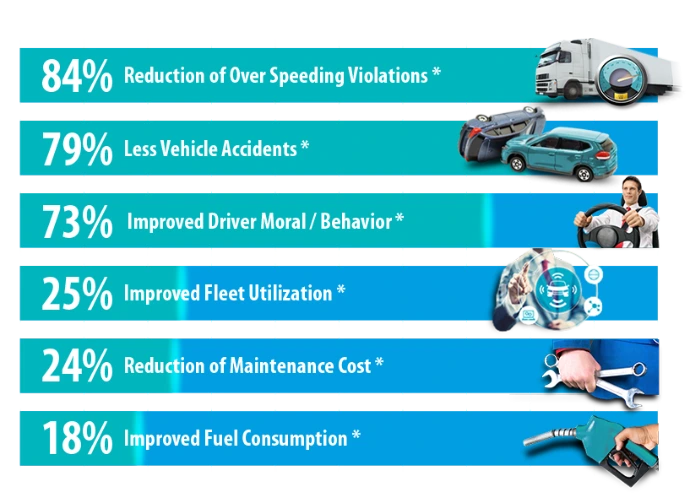
Did you know technology can make your drivers Happier? It’s true, based on a study done by FMS-Tech, driver moral increased by 73% across clients that installed an IVMS or telematics device.
The reason for the change is in the “Driver Merit System” which gives feedback on a regular basis to drivers in an SMS format, and on a point based system. Once drivers have accumulated a certain amount of points, they can redeem for prizes, or even cash!
Part 1 -The problems you can solve with an IVMS, telematics, or on-board computer
The most commonly known problem solved with a fleet management technology is: Where are my vehicles?
But in today’s market, technology offers much more than just a GPS location of a fleet manager’s vehicle. Other fleet problems that are being solved today with technology include the following major topics:
- Managers do not know if safety policies are being followed
- Unauthorized use of company vehicles
- Asset usage policies are not being followed
- Vehicles being used in restricted areas
- Drivers are not being rewarded for good behavior
- Theft of cargo and/or fuel
- Containers and Trailers are being used for illegal activity
- Unauthorized drivers in the driver seat
- Roads are unsafe and have high accident rates
All of these topics are addressed and solved with a comprehensive fleet management technology, but what is often overlooked is how the data is delivered, displayed, and reported which brings us to our last commonly seen problem:
Data is not easily accessible or hard to interpret
Powerful technology is useless if you are unable to comprehend and use the data. Ensuring that your software provider can give easy to read reports on an automatic basis is the only way to ensure improvements in fleet performance is tracked and optimized.
Customized reports developed free of charge is the most efficient way to keep your data organized, in line, and providing results- so asking for this from providers is another great way to optimize your fleet management technology.
Part 2 – The additional benefits you can gain from an IVMS, telematics, or on-board computer.
If you are a fleet manager investing in a new technology, you are most likely satisfied if that technology solves your main or largest fleet problem. However, managers should be aware that there are some top of the line benefits that keep paying off long after the fees are paid.
Here are some of the best benefits to look for, and ask about:
Did we mention Safety?
Even though Safety policy was mentioned in part 1, because of its importance, it’s worth mentioning again. Vehicles installed with a fleet management technology have a 79% less chance of being in an accident.
Not only does that reduce the accident related costs a fleet manager occurs, it also supports corporate-wide goals, make drivers feel more safe, and overall improves the community.
Transparency of fuel efficiency due to driving performance
There are many driving habits that poorly effect the fuel efficiency of a vehicle including long idling times, harsh acceleration and breaking, and over speeding. These behaviors can lower your gas mileage by 15% to 30% at highway speeds, and 10% to 40% in high traffic areas.
A good fleet management technology will provide the data in an easy – to read format to help fleet managers identify drivers and behaviors that are impeding on their fleet efficacy goals.
A realistic goal is a system that will help reduce fuel consumption by 15 to 25%.
Decreased vehicle maintenance
Similar to the concept of increased fuel efficiency – the bad habits that drivers tend to develop can increase the need for vehicle to be maintained.
Fleet managers can expect a decrease of 24% of their maintenance costs if a fleet management technology is installed in their vehicle.
These technologies also offer an 84% decrease in over speeding violations which is one of the common driving mistakes that can cause vehicles the most damage.
Hardware and Software Integration
Most Fleet management technology companies develop either the hardware or software and outsource the other – but rarely do they develop both hardware and software in house.
The advantage to finding a provider that develops both under the same roof is seamless integration and easy access to updates, support, and customization.
These providers have hardware and software engineers working together on a daily basis to develop reliable solutions and decrease the fleet manager’s need to manual check on individual vehicles or drivers.
Approvals & Certifications
Some fleet management technology companies have worked hard to achieve local certifications to ensure high quality standard for their clients. These approvals include government and industry specific such as Oil and Gas.
Tachograph
Understanding what happened in an accident is important for many reasons including insurance claims and improving systems to ensure such accidents do not occur again in the future. Tachograph is a technical, and very accurate way to re-create an accident and see the root cause clearly.
What is Tachograph?
Tachograph – a device fitted to a vehicle that digitally records its speed and distance, together with the driver’s activity selected from a choice of modes. Tachograph outputs are read to determine the cause and effects of a vehicle accident.
Part 3 – Some current technologies to look for when deciding the solution that is right for you
Fleet Management Technology has come a long way from simply knowing where your vehicles are.
Today Fleet Management Technology can provide information about the driver, reward drivers for good performances, prevent against theft, control the operating areas of vehicles, keep goods secure, and most importantly keep roads safe.
Some of the technologies that can provide such benefits include:
GPS has become a common term globally and is normally the first go – to feature fleet managers have in mind when looking for technology to install in the fleet vehicles, but in today’s market GPS is the most fundamental and basic feature installed in today’s vehicles.
The next level of technology, often referred to as telematics is the software solution to providing information about the vehicle and driving behavior such as seatbelt status, harsh breaking, harsh acceleration, and fuel consumption.
But with today’s technology – fleet managers have access to a much wider range of data points in which to draw from their vehicles therefor providing more transparency.
How much can your fleet improve by installing an IVSM, Telematics, or On Board Computer?
- Improved Customer Satisfaction
- Less CO2 Emission / Improved Environment Footprint
- Improved Operational Efficiency
- Improved Time Attendance
- Improved Job Completion
*Based on FMS Tech users’ feedback


 FMS Tech.